Let me describe a client. You might recognise yourself in her.
Three weeks into training, she was on fire. Texting us photos of her lunch. Sleeping better than she had in years. Telling her husband I was a genius. (Don't worry, I haven't let it go to my head.)
Six months in, the same woman walked into the gym and quietly told us she was thinking about quitting.
Stronger than ever. Leaner than ever. Sleeping like a rock. Lifting weights she would have laughed at half a year earlier.
And flat as a pancake about it.
If you have ever been that person, this article is for you. Because what's happening is not a motivation problem. It's not a discipline problem. It's a measurement problem. And once you see it, you can't unsee it.
The Framework: The Gap and the Gain
The frame we use to explain this comes from Dan Sullivan, founder of the Strategic Coach programme, and Dr. Benjamin Hardy, an organisational psychologist. They wrote a book together called The Gap and the Gain. The premise is simple enough to fit on the back of a beer mat.
Humans measure their progress in one of two ways.
The Gap is the distance between where you are right now and where you want to be. Your dream body. Your goal weight. The version of you who deadlifts 200 kilos. The you that exists in your imagination.
The Gain is the distance between where you are right now and where you actually started. The version of you who couldn't do one full press up. The you who got winded climbing the stairs at home. The real, documented, on the record version of you from before.
Same person. Same progress. Two completely different yardsticks. And here's the kicker: which yardstick you choose has nothing to do with how well you're doing. It has everything to do with how you feel about it.
Why The Gap Gets Worse The More You Win
Here's the part nobody warns you about. The gap doesn't shrink as you make progress. It grows.
When you start training, your ideal is small. "I want to do one press up." You hit it. You feel amazing. Then your ideal moves. Now you want ten. You hit ten. Now you want a chin up. Then a bodyweight bench press. The ideal is always one rung above where you currently are.
This is healthy. This is how humans grow. It's also a trap. Because the gap between where you are and where you want to be will never close. It cannot. The moment it closes, you set a new ideal and the gap reopens. By design.
So if your only source of satisfaction is closing the gap, you will be miserable forever. Even when you're winning. Especially when you're winning. This is why your most committed clients sometimes look the most defeated. They're not failing. They're stuck in the gap.
And then there's social media. Instagram is a gap factory. Every single scroll feeds you images of someone fitter, leaner, stronger, more disciplined than you. Your ideal grows every day, faster than your gain ever can. (Our humble suggestion: follow more dogs and fewer fitness influencers. You can quote us on that.)
The Fix Is Not What You Think
A common objection: "If I just look backwards I'll get complacent."
The research says the opposite. Sullivan and Hardy found that people who measure backwards have more energy for what's ahead, not less. Gratitude fuels effort. Frustration drains it. The runner who celebrates each kilometre runs further than the one who stares at the finish line for the entire race.
So the fix isn't to abandon goals. The fix is to change the question you ask yourself on a Monday morning.
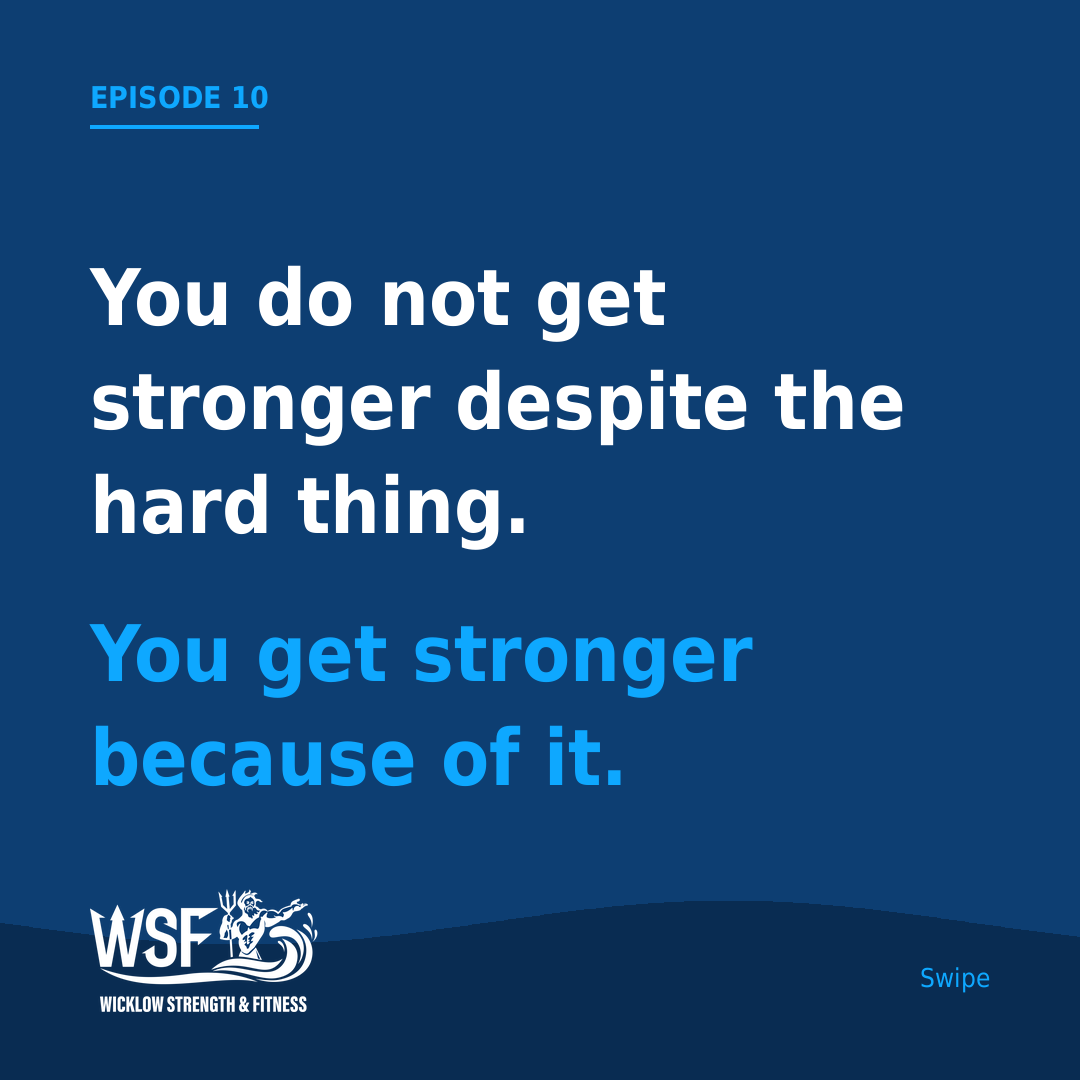
Stop asking: "How far am I from my goal?"Start asking: "How far have I come from where I started?"
Same numbers. Different question. Wildly different feeling.
Three Practices You Can Start This Week
If you do nothing else after reading this, do these three things.
1. The Friday Five Minutes. Every Friday, before you finish work or before you train, open your notes app. Set a timer for five minutes. Answer one question: what did I gain this week? Not what you achieved. What you gained. One extra rep. Three sessions in the gym. Two nights of decent sleep. A walk after dinner instead of the couch. Write it down. Close the app. That's the whole practice.
2. The Three Month Rewind. Once a quarter, look back exactly three months. Not at goals. At facts. What were you lifting? How many sessions a week were you doing? How was your sleep? Compare honestly. Most people are stunned by how much has changed because they were too busy chasing the next thing to notice. If you train at WSF, your coach can pull these numbers for you. Just ask.
3. The Past Me Photo. Find a photo of yourself from before you started. Not a flattering one. A real one. Keep it somewhere you'll see it once a week. When the gap is screaming at you, look at past you. That person would be in awe of where you are now. Honour them.
The Real Reason People Train For Ten Years Instead Of Ten Weeks
We are not motivational speakers. We are a gym. Our job is to write good programmes, coach good lifts, and keep people safe under the bar. But the truth is the people who get results AND keep them are not the people on the best programmes. They're the people who have learned to enjoy the process. They've learned to measure backwards as often as they measure forwards. They've learned to live in the gain.
That's a coachable skill. And it's the difference between someone who quits at month four and someone who's still training at fifty.
Listen To The Full Episode
We unpack all of this on this week's episode of the Wicklow Strength and Fitness Podcast. Real client stories, the science behind why gratitude beats grit, and a longer breakdown of the practices above. Find it on Apple Podcasts, Spotify, or wherever you get your shows.
Want To Train With Us?
If you live in or around Wicklow Town and you've been thinking about joining a gym that actually coaches the mental side as well as the physical side, the door is open. We start every new member with our Jumpstart Program, an onboarding process designed to set you up properly from day one.
The first step is a free consultation. No pressure. No sales pitch. Just a conversation about where you are, where you want to go, and whether we're the right fit.
Book your free consultation here.
Train hard. Measure backwards.
.png)