
The Necessity of Resistance
The most important word in fitness is not motivation. It is not discipline. It is not even consistency, though that one is close to our hearts.
The word is resistance.
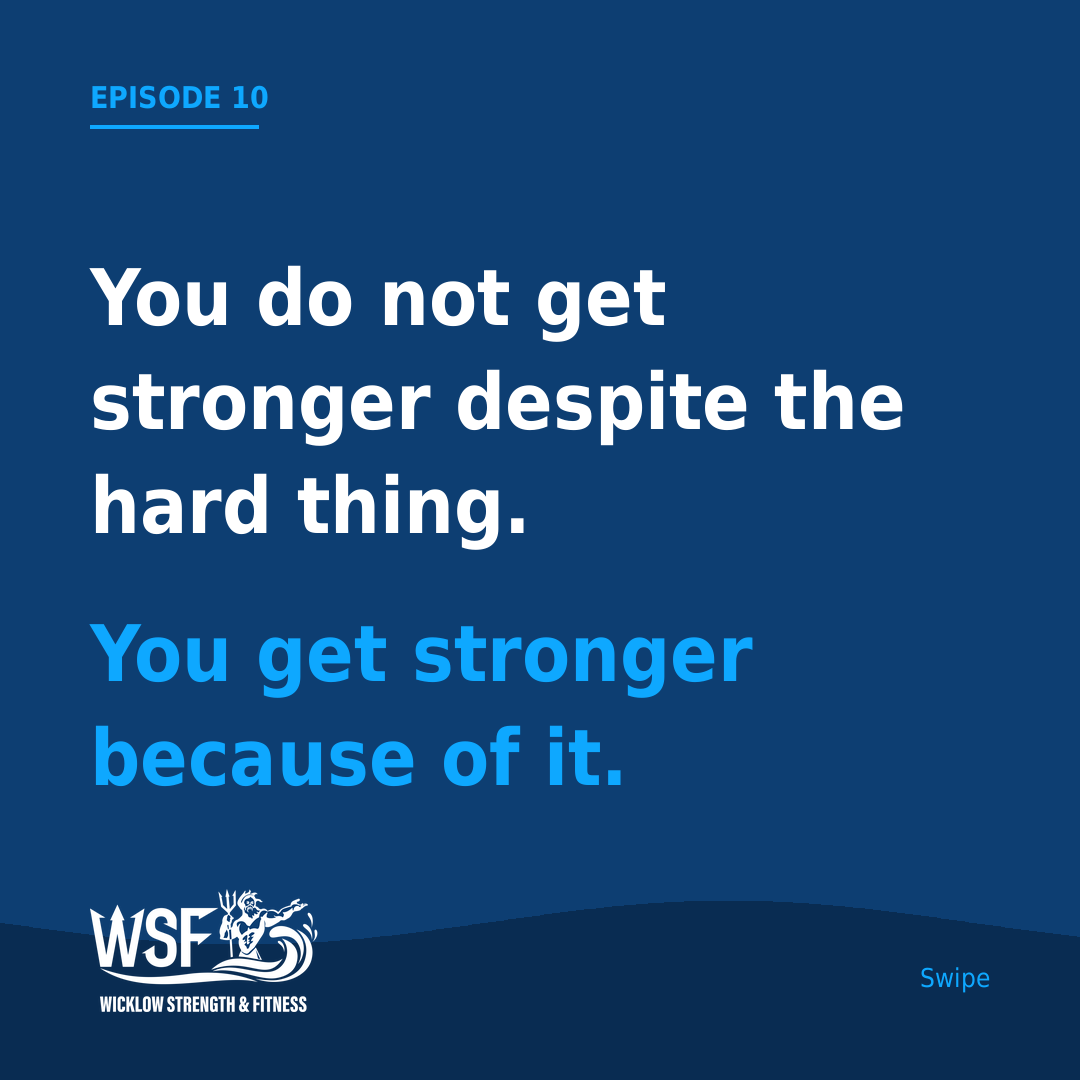
And here is the part nobody really wants to hear: you do not get stronger despite the hard thing. You get stronger because of it. The resistance is not the obstacle standing in the way of the result. The resistance is the thing that creates the result. Take it away and there is no result. There is just comfort, and comfort, left alone, is a slow slide backwards.
This post is about why that is true, why it is written into your physiology, and why the same law runs through your training, your work, and your character.
Comfort is a drift, not a destination
Let us start with the most honest example available, which is the coach writing this.
You can coach this for a living and still drift. There are stretches where your own training gets comfortable. You go through the motions, you lift the weights you know you can lift, you avoid the things that make you breathe hard, and none of it feels like a decision. That is the trap. Drifting never feels like a choice. It feels like normal.
And every time, the fix is the same: rejoin the class that forces you to work. Not because it is pleasant in the moment, but because it puts you in a room where you cannot coast. It reintroduces resistance on purpose, because most of us, left to our own devices, will quietly choose the easy version of everything.
This is the first idea worth sitting with. Comfort is not neutral. It feels like rest, but it is closer to reverse. Your body, your business, and your character do not simply hold a position. They respond to whatever demand you place on them. If the demand is nothing, the response is decline. So the useful question is never "am I comfortable." It is "have I drifted, and what am I going to do about it."
The body proves it
Here is why we can be so confident about this, and it is not a feeling. It is one of the most settled ideas in exercise science.
Your body adapts to exactly what you ask of it. Coaches call it the SAID principle, specific adaptation to imposed demand. The phrase is technical but the truth is simple: you are always training your body to be good at whatever you actually do. If what you do is sit at a screen, you get very good at sitting at a screen. If what you do is lift heavy things, you get good at lifting heavy things. You are how you move, and how you do not.
Now stack the second idea on top: progressive overload. Your body only improves when the demand is greater than what it is used to. Not equal to. Greater than. If you lift the same weight for the same reps forever, your body has no reason to change, because you have not asked it to. The moment you ask for slightly more than it can comfortably give, it is forced to adapt. That discomfort, the "this is a bit too much" feeling, is not a warning sign. It is the signal that growth has been requested. The strain is the stimulus. No strain, no signal. No signal, no change.
And here is the part that ties it together. When you train, you are not building yourself up in the moment. In the moment you are breaking down, creating a stress the body must recover from. The adaptation, the actual getting stronger, happens afterwards, in the rest.
Which gives us the honest caveat, and this is exactly where a lot of tough-guy fitness advice falls down. Resistance without recovery is not growth. It is just damage. If all you ever do is pile on stress and never let the body bank the adaptation, you do not get stronger, you break down. There is even a name for that final stage: exhaustion. So this is not a call to suffer endlessly. It is a call to choose the hard thing and then respect the recovery that turns it into strength. Stimulus and rest. Both. Always.
The same law runs through everything
This is where it gets interesting, because that law does not stay in the gym.
Running a business through genuinely hard stretches teaches the same lesson. The long days when the numbers were not working. Putting your own money in to keep things moving. Looking at every expense and becoming ruthless about what stays and what goes. Raising prices and then standing there to deal with the fallout. None of that is comfortable. All of it is resistance. And every one of those hard stretches makes you better at the job. Not despite the difficulty, because of it. The ruthless cut teaches you what actually matters. The price rise teaches you to stand behind your value. The long days teach you what you are capable of when it counts.
Same law as the barbell. The demand exceeded what was comfortable, and you were forced to adapt into someone who could handle it. Comfortable owners running comfortable businesses do not grow, for the exact reason a comfortable lifter does not grow. No demand, no adaptation.
You see it in members too. A group from the gym recently travelled up to Belfast to compete in a CrossFit competition. They did not have to. It would have been more comfortable to stay home. But they chose to put themselves in a room full of strangers, under pressure, doing hard things in front of people, on purpose. And they came back different, more confident, more capable, prouder. Not because it was pleasant. Because it was not, and they did it anyway.
Choosing resistance on purpose
If comfort is a drift and resistance is what interrupts it, then the most useful skill you can build is choosing resistance on purpose, before life forces it on you.
Because it will come either way. Resistance arrives in everybody's life whether they invite it or not. But there is a difference between the resistance that happens to you and the resistance you choose. The chosen kind builds you in advance. It is a rehearsal. Every time you voluntarily walk into something hard, you are training the exact capacity you will need when the unchosen hard thing arrives.
You do not need to blow up your life to do this. You need to notice the drift and interrupt it in small, deliberate ways. In training, that is honest progression: the weight that is slightly too heavy, the one more rep you did not think you had, the class that scares you a little. If your training has felt easy for a while, that is not a sign you have arrived. It is a sign you have drifted. In life, it is choosing the harder-but-better path when the easy one is right there: the conversation you have been avoiding, the habit you know you need, the thing you keep putting off precisely because it is uncomfortable.
You are not looking for suffering. You are looking for the smallest honest demand that is slightly more than you are used to. That is the sweet spot. And then you recover, and you go again.
The bottom line
Comfort is not the reward for a life well lived. It is the drift you have to keep interrupting. The strong body, the strong business, the strong character, none of them are built in comfort. They are built in the moment you choose to do the thing that is a little too hard, then recover, then choose it again.
Resistance is not in the way of the good life. It is the price of it. And the best news is that the price is one you get to choose to pay, in small deliberate doses, on your own terms, before life hands you the bill instead.
So this week, find your drift. Find the place you have gone comfortable, and walk back into something hard on purpose.
If the hard thing you have been avoiding is walking into a gym in the first place, let this be the nudge. Booking a free consultation is a small, deliberate dose of the good kind of resistance.
Book your free consultation here.
.png)


